sitemeter

Saturday, August 28, 2010

BOOKS

After spending time browsing more Lomography websites, I came up with a list of books that I think they may be useful for people who are interested in Lomography. Although these books share their similarities in discussing the topic of Lomo, there are more different aspects which seems to highlight the unpredictable journey into Lomography.

"Don't think just shoot" by LSI which is the first official publication on the phenomenon of Lomography.

Even though I’ve never read this book, the title is just a really valuable encouragement for people who are new and inexperienced lomographers. From my perspective, this book is a must have for those interested in becoming a Lomographer.

“We Love Lomo”by Lomo Taiwan Group.

One of my Taiwanese friends recommended me this book when I was in New Zealand. As you can see, this is a Chinese version, but I love the feel of this book. It represents the spirit of Lomography which is simple but meaningful.

"Plastic Cameras" by Michelle Bates.

It’s quite rare to find a book which provides great content as well as many useful tips and techniques in Lomography. Michelle Bates takes us to share her love of Lomo cameras throughout her experience. As she says, “truly great images come from the vision of the photographer, not from the equipment”.

"Toy Cameras: Culture and Celebration" by Chelsea Klukas.

No doubt about it, the colorful images with different effects attracted me to read this book. Chelsea Klukas doesn’t only describe her journey and love on Lomography in this book, she also gives different examples and interviews with members of the Toy Camera community.

As I read back over the former posting of our group, I am surprised that our topic of Lomography has grown to such interest. We started out with the culture and equipment of Lomography and subsequently focussed more on specific examples and expressions of personal feelings on Lomography.

I really do appreciate one of the rules of Lomography; “Lomography is not an interference in your life, but part of it”. These books can help to develop skills in anyone who is interested in Lomography, and also to learn and see life through diverse camera lenses. I know many people always compare plastic cameras with digital cameras, in fact, I think high priced digital cameras and cheaper valued plastic cameras both effectively deliver creativity at its best.

Thursday, August 26, 2010

Keep your eyes open

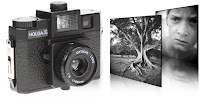
Meet Holga.

This is an extremely simple plastic camera introduced in 1982, Hong Kong. The name of "HOLGA" comes from it's Cantonese name "Ho Gwong", which means "very bright". The plastic 60/8 optical lens is seen as the soul of Holga,it is semi-wide, so the pictures have a wider perspective than usual. Besides, due to the unique texture of plastic, the colours are radiate and the sharpness of images are reduced.

A typical Holga picture also have vignetting around the edges.

Diversity is another specification of Holga, from the look of camera it self to the forms of pictures that it could create, Holga is almost the pronoun of creativity and freestyle.

The Holga camera family include black, green, red, pinhole, 35mm, 120 3D and so on... They all have a simple but classic look.
Pinhole camera does not have a lens, a pinhole in the front will capture the light and along with the long exposure time. In the dark nights, hours of exposure will create a dreamlike style, moving objects will become blur and ghost like. I am personally fascinated by the whole idea of pinhole cameras and the images that it created without focus. They are extremely soft and make me feel relax in some way. Moreover, If the camera is set up in a darker condition, I would like to imagine how amazing the movements and lights will be presented by the Pinhole cameras.

The other strange looking but interesting Holga is the 3D series.This strange looking camera has two lenses and can capture two images at the same time, side by side. When looking through a specific viewer, the pictures could become 3D. This will make the images more vivid and the moment captured freshly preserved.

Recently, Holga introduced build-in coloured flash filters. This increased the possibility of taking photos with different colours. This give me the inspiration of colouring the world, as I just made this short film about a blind guy exploring the colours of the world. I created this story with an idea that the visual impressions of a colour is not important, but the way people feel it. Imagine taking a camera and take pictures with whatever colour you like. When we are in a sad mood, the world would be blue; when we are in a happy mood, the world would be yellow...


This is a cheap, simple, compact camera that suit every backpack or purse. To take it and snap is equal to keep another eye open in our lives. Holga plays with light and mood, it is another point of view that creates it's own world.
Keep the eyes of Holga open.
Sources:
Holga Site
Photon Detector Blog

My friend's work

Nowadays, lomo camera is becoming more and more popular. I am considering whether Lomo camera is becoming a kind of professional photography equipment or people’s toy in modern life. Maybe both! The darkness is one of the feature of lomography, also starts another shooting style, even life style. People in different age groups, different areas, different religions shares the joy that lomography brings to us, even Dalai Lama is into Lomography. Unfortunately I fail to search Dalai Lama’s lomography works, but I can imagine when Lomo meet Buddhism, it should be another kind of feeling-mysterious and quiet. Following is one of my friend’s works, which suddenly drag me into Buddhism atmosphere. I like it very much, here sharing with you~


My friend took this photo in a local Wax exhibition; this wax is a monk who is painting Buddha. The main color is scarlet, which is also representing Buddhism. When he uses Lomo camera to shoot this photo, the scarlet has been highlighted, the whole color tone is tend to red. However, the special lomo effect makes the color more dense, more dark. And here, the red and the monk image make audiences sense calm, instead of passion.

It's why I like this photo so much, hope you like it too.


Wednesday, August 25, 2010

I am what I shoot

Since I found out about Lomography, besides the charming effects which make me feel intrigued, another reason is that people of different photography skill have equal opportunity to be a lomographer. No matter the age or how amateur they are, it is all about just what you shoot.

Few weeks ago, one of my classmates Michelle who is an amateur lomographer has recommended me to a lomography exhibition that begins in Hong Kong.

This following link shows more detail of the analogue exhibition in Hong Kong which is written by Eric Luk, a young lomographer.

http://www.lomography.com/magazine/events/2010/08/02/analogue-exhibition-in-hong-kong

He demonstrates an interesting theme in the exhibition; “My point of view-What are truth and reality, Do they exist?” The way that he thinks and idealizes about developing his lomography work makes me curious about the lives of people, which can be captured as art on a single picture.

Moreover, the theme gives the audiences insight into the existence of the truth and reality to their lives and even to the society. Now, I live in a country where everyday is a challenge, given the new environment. It maybe because I meet and study with people who are from different parts of the world. However, I find this life inspiring and meaningful as underneath the differences, we all share similar feelings and emotions.

Although I’m still new to lomography, whenever I browse through different lomo cameras from shops, it’s just like a symbol of excellence, out of the norms. After having a more thorough understanding of lomography, what I have learned is that whether we use lomography or photography, we all have the same attitude of sharing, communicating and expressing feelings. If you get a chance to communicate with different people and learn from it, that’s the most precious part where you get this spirit. Now much more than a camera, Lomography is a dynamic international organization revolutionizing the way people see, and record, the world around them.

Source:http://www.lomovember.com/lomo.html


Saturday, August 21, 2010

How i met my first fisheye camera

My first lomography camera is a very tiny white fisheye that I bought for myself as 20 years old birthday present. I bought it in Sydney city Incu Store where is famous at sale selected brands clothing and crafts but also gets some lomography cameras as well. Once I walked into Incu, the lomography cameras displayed on the top of shelves that grab my attention in the first place because I was interested in lomography photos around that period and I could not find the place to buy it. Even there are many fabulous lomo camera shops online but I still do not feel can buy it without physical contact. When I buy things I used to touch it, hold it on my hands even look into mirror to see how I look like with it, it sound like a strange foible but it completely works on helping me to find the “right one”, the one only suits me I think.

It had better to go back to my subject, there a few lomography cameras on shelves with their effect picture albums that almost shoot by local lomo enthusiasts and also some professional lomographers. These great albums took me time to browse and it showed a completely different and colorful world to me, I thought everything in lomo’s world is complete and extreme like the black color always be complete dark black without possible occurrence of light black or grey. I also found some “accident” lomography pictures within albums such as a photo only captured half face or did not shoot with right angle. However, these “accident” usually works well in lomography world that might could not be separated from lomo’s theory “don’t think, just shot”.

I was really into it and had a strong passion to get one as soon as possible. Therefore, I finally choose my most favourite one, the white fisheye after i asked Staff's advice. This one is easy for new user to manual control because it does not get some compilicated options, and it is also tiny for put in bag. Hence, my lomo world journey started in my 20 years old with this adorable fisheye.

This was the first film i shoot with fisheye, i choose the street i used to live as my subject. Even i failed about 6-7 photos at the first time but it was still a precious experience in my lomo journey.

Kingsford, Sydney 2009


Thursday, August 19, 2010

Watch out! New event about lomography


Where

7998 Santa Monica Boulevard

Lomography Gallery Store LA

7998 Santa Monica Boulevard

When

August 31, 2010 19:30 until August 31, 2010 21:30

Contact

shopla@lomography.com

The Lomography Gallery Store LA is lighting up West Hollywood with one of our most popular workshops... Light Painting!

Light Painting is a very popular workshop where is taking the analogue world by storm. The lomography Gallery Store LA is lighting up West Hollywood since they show you the basics of Light Painting, moreover, the instructions of using techniques, tricks, and tips that will show you how to create your own color streaked and splashed masterpieces!

You can borrow Diana F+, Fisheye 2, or Colorsplash camera to achieve amazing analogue effect under the instruction.

All of these experience cost you $10 (students $7), includes an instructional lecture, loaner camera and one free roll of film. What is more, if you bring one of the aforementioned lomo cameras of your own you can get free entrance! All visitors can receive a 10% off ticket to use at the Lomography Gallery Store.

You can contact at:

Lomography Gallery Store LA

7998 Santa Monica Blvd

West Hollywood, CA 90046

(323) 301.1414

shopla@lomography.com

Even though I cannot go to West Hollywood to experience the fabulous show, but I suggest people who is living in the US and crazy about lomograpgy can go and learn the tricks about light painting. Fortunately, one of my friends is a fan of lomo light painting, she told me this effect can be achieved by extend explore.

Following are the works in Light Painting Gallery in West Hollywood:


Featured lomography shops in Sydney

I personally think it is better to hold a real camera on hands for selecting rather than choose them online because physical contact could generally bring advanced reliability to customers and the lomography shop salesperson usually could give you several productive suggestions about your camera, especially for new users. The most important thing is you might find your “right camera” after you physically touched them. Therefore, in this week ‘I luv lomo’, we will introduce some featured lomography shops where located around us in Sydney. You will know where you can buy and what kind of lomography cameras you can buy in your nearest lomography shop.

1. Just Shoot Lomography Shop


Location: Belender Gallery, 16 Elizabeth Street, Paddington, Eastern Surburbs

Feature: It sales almost all kinds of lomography cameras and also provides exhibitions of local or international photograhers.

Openning hours:

Sunday and Monday : Closed

Tuesday to Friday : 11am-6pm

Saturday: 10am-6am

Contact detail: +61 293807080 Email: info@blender. com.au

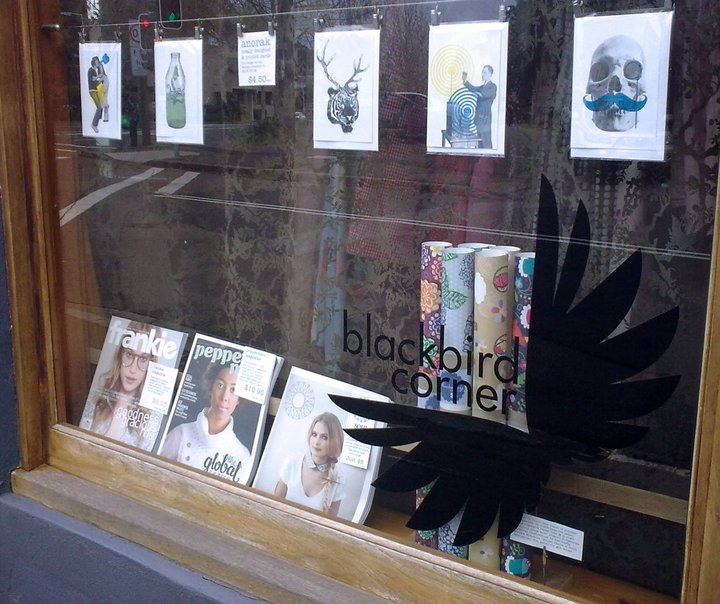
2. Blackbird Corner


Location: 70 Darby Street, Cooks Hill, Newcastle NSW 2300

Feature: It sales a range of lomography cameras and you will also find many locally designed & created clothing, accessories inside the shop.
openning hours:

Monday : Closed

Tuesday to Friday : 11am-6pm

Saturday to Sunday : 10am-6am

Contact detail: 0249294305 Email: blackbirdcorner@yahoo.com.au

3. Incu


Location: Galeries Victoria, Shop Rg 19-20, 500 George St, City, NSW 2000

Feature: It sales a few selected lomography cameras and mainly focus on Diana F+, Fisheye and Holga.

Openning hours:

Monday to Sunday: 11am-6pm.

Contact detail: 0292837622

4. Museum of contempopary art store (MCA)


Location: Circular Quay Foyer Level 1 Museum of Contemporary Art West Circular Quay, The Rocks

Feature: It sales a limited range of lomography camera but it gets some limited edition ones as well, and also provides diverse art exhibitions (includes famous photographers) for mostly free.

openning hours:

Monday To Sunday: 10am-5pm

Contact detail: (+612) 9245 2458 Email:Store@mca.com.au

5. High Exposure Camera Imaging

Location: Shop 15, 355 Barrenjoey Road, Newport NSW 2106

Feature: It is a very professional photography shop located in Sydney's Northern Beaches. It stock a full range of lomography camera and relevant accessories and also provides print and develop service of lomography 120mm and 35mm films.

openning hours:

Tuesday 9:30am-4.30pm
Thursday 9:30am-4:30pm

Contact detail: 0299996979 Email: info@highexposure.com.au