sitemeter

Tuesday, August 31, 2010

"photography is murder"-----Nobuyoshi Araki

Nobuyoshi Araki is a well-known and controversial photographer who takes a fundamental role in Japanese Art extent. Someone thinks he is just a freak and voyeurism because most of his photography subjects are focus on something taboo or conventionally forbidden like naked women, their vaginas and boobs with extreme close up shoot and even sometimes bound Japanese women wear traditional kimonos or completely naked. Araki said the reality always exposure after being naked. However, he also gets a massive number of loyal cross-cultural fans like a very famous one, Iceland singer, Bjork.

Except his symbolic subjects, naked women, Araki also likes to shoot reptiles, died fishes, his favorite cat, transformation of clouds, especially his hometown Tokyo. He claimed that in one of his interview in 2003, Tokyo city has somehow mysterious relation with sex, the dark side of Tokyo city is similar as intricate sex which is hided in the depth of Tokyo. Araki barely uses digital cameras for filming and addicted to lomography. He published particular two photograph albums that taken by lomo cameras. He likes both black-white and colored photos and he has very unique opinion about them. Araki said black-white represents death in his picture and colored ones express vitality.


This might be related to his personal experiences about death, her wife Yoko and his maiden work ‘sentimental journey’. This work records his honeymoon and also could be seen a documentary album of her wife’s death. 'sentimental journey' is my favorite one among his approximately 200 photography albums. It might be an important reason which helps me to understand a little bit about his works. I was definitely shocked and felt extremely uncomfortable when I was first encountered his symbolic pictures, I was thinking about how could he take these sorts of ridiculous photos? And then I began to wonder what kind of person could take these quirky things and what about his real life. It was unbelievable to find out he has a beloved wife and he directly documented her death with camera. Yoko was always his favorite model and the first person gave him evaluation about his works.

There are two specific photos of ‘sentimental journey’ that impressed me a lot. One is Yoko peacefully lied on a boat alone. She looks so relax but it somehow reminded me a sense of sadness. Especially I knew she already had cancer when Araki filmed. This is a kind of feeling about a husband watches beloved wife is dying but he has nothing to do but took the photo and it will remind himself everytime in the future. Espeically Araki used film camera to shoot this one which perfectly suited for the meaning of it, the best moment will never comeback again, you just could record it but can't change it.

The second one is very touching and I almost cried when I first saw it. This photo was also taken by Araki himself. Araki holds Yoko’s hand and she is already gone at that moment. This is the ending of Yoko's life, the ending of photographic conversation between Araki and Yoko, also the ending of 'sentimental journey'

"Maybe I only had a relationship with her as a photographer, not as a partner. If I hadn’t documented her death, both the description of my state of mind and my declaration of love would have been incomplete. I found consolation in unmasking lust and loss, by staging a bitter confrontation between symbols. After Yoko’s death, I didn’t want to photograph anything but life – honestly. Yet every time I pressed the button, I ended up close to death, because to photograph is to stop time. I want to tell you something, listen closely: photography is murder."

-------------------Araki

Sources:

http://www.lensculture.com/oborn.html

http://q.sohu.com/topic/2562075

http://www.showchina.net.cn/bbs/viewthread.php?tid=6286

Monday, August 30, 2010

Communities of lomography


Lomography is a new form of artistic, mixing vintage and analogue cameras to make snapshot. The film can enhance color of photo, photographer can also make special effect.
There are “10 Golden Rules” of lomography, nearly 1 million lomographers world wide. These rules are representing the spirit of lomography and the mindset of the creaters.
The “10 Golden Roles” can be seen from what YOKO already listed in the article “Be a lomographer without lomo cameras!

The Lomography Website is an amazing community that I suggest everyone who crazy about Lomography must see. It offers some wonderful features, such as free membership. With membership you get unlimited photo storage to record your life, and profile page to share your work and are granted the ability to comment, review and write content.What is more, you can keep up to date with the new type of artistic, entertainment on a load of networking sites such as Twitter.

Personally, already add Lomography on my facebook, it provide with the latest event of lomography, people can join in as a community, and there are many people comment on the status, coming up with their questions about lomography equipments, skills, tracks etc. And there will be professional lomographer to update the status, noticing friends what is new in lomography and share happy experiences. The most important thing is that people can make more friends who have the same hobby, it indeed a good way to enhance intercommunicate extent.

Photography!?Lomography!? Just shoot it-Belinda Nolan

There are so many talented photographers out there is hard to discover them all. Thanks to Janice recommend us a lovely and talented photographer as our interviewee, Belinda Nolan, who shares her experiences and thoughts in photography and Lomography, as interviewed by Yan and Yoko. We hope you to enjoy and feel inspiring of this photographer interview.

As Belinda said “It’s been with me since I was a little girl”. She started to talk about her experience of photography.

Since Belinda was a child, she got given an old camera and for her 10th birthday, she got given a codec camera. She told us that she took it around everywhere she went and documented from schools and holidays. She also remembers the excellent of going to the chemist and getting her photos developed. And then she went to study photography later on when she was in university and working in the darkroom and having that sense of image revealed before she was thrilling, so she then also explored into digital photography.

In more detail, Belinda thinks digital camera and film camera serve different purposes. She for many years had film cameras, since it was the only thing available. You can get remarkable atmospheric shots, with a sort of rigidness in the shots when it is punted. But there’s no escaping the power of digital cameras, when you take an image, you can see the image and if you don’t like it you can get rid of it, and then if you want to go home and print it and you can do it. So within moments, you have everything.

For the choice of black and white, there is not a lot of stimulus happening within the photograph, the soul of the photograph seems to come forward, you seem to enter into what the photo is about. But also the shades of black, white and grey, in terms of and mood creates something that is very appealing as well.

Belinda says her style of photography is not something that has been conscious. The most enjoyable time of her daily exercise is taking her dog for a walk with her camera. Because she usually goes to the places by the water and the park, it’s happened that invariably the photos she has been building up in the past few years is of nature photographs. During the interview, I found something interesting was that Belinda has mentioned she doesn’t feel comfortable about taking strangers’ photo. From her perspective, she thinks she’s reluctant to put a camera in somebody’s face, because privacy or something that she respects, so she’s more relaxed with nature photography.

In addition, Belinda explains that since digital camera has become popular as a trend and people have almost forgotten film and lomography. She thinks it gives people the opportunity to pick up film photography, but also be innovative with it, like the different lenses you can get with lomography and the different colors you can bring into it. So the outcome is between digital and film, that you can alter the image. Also some of those particular cameras are so tiny that you can put them in your pocket and have them wherever and create wonderful images. Moreover, Belinda also gives some examples of websites which upload great lomography images, so it has created a whole new force of expression.

At the end, Belinda suggests to new photographers that always take the camera with you and use it, let it be an extension of you. Don’t be too precious of your camera and make it like a journal as a visual diary. And then you find that the art follows, because you are so relaxed when you have got your camera. Just take it shoot it enjoy it.

Thanks again to Belinda!

Restyle Belinda's photographs with lomography effects and we also looking forward Belinda's comment to this.

Be a lomographer without lomo cameras!

Do you addict to lomography? Do you only have one or two lomo cameras? Are you bothered when taking your lomo camera with you everywhere? Do you still concern about your own lomography shooting skills? Or Do you have no lomo camera at all? So, what makes these things happen? Actually, the answer is diverse and common. These situations could happen to every normal lomography enthusiast. Sometimes, the reason just might be that you have no time to buy it or your current funds would not suffice at the moment for buying one more camera. But what can we do with these common problems? I mean, as a lomographer? Do you still remember the “full name” of Lomo, “let our lives be magic and open”. Lomographer certainly have flexible and creative solution to deal with them. Firstly, it is a time to review our 10 golden rules of lomography and we will see the key from it.

1. Take your Lomo with your everywhere you go.

2. Use it anytime, day and night.

3. Lomography is not an interference in your life, but part of it.

4. Try the shot from the hip.

5. Approach the objects of your lomographic desire as closely as possible.

6. Do not think.

7. Be quick.

8. you don’t have to know beforehand what you captured on film.

9. Afterwards, either.

10. Don’t worry about any rules

(http://www.rachro.com/LomoRules.html)

The last sentence usually is the most important one and it absolutely works on our situation. Therefore, be an eligible lomographer, forget any rules and find your own creative way to solve your problem! Today’s ‘we luv lomo’ will give you some trendy solutions to help you finding the ways.

1. If you don’t have lomo camera or it inconveniently take it with you, then how about your mobile phone? It suppose to be with you anytime. So, today we got tiny lomo camera lens that could stick on your mobile phone and take pictures with lomo special effects. It only costs 2-3 dollars! (it also could be used on your digital camera) It definitely matches lomo's notion, just shoot anytime in anywhere.

As you choose different lens, they will have various lomo special effects like wide angle, stretch, spilt images, heat frame, filter, soft lens and classic vignette angle.


2. If you still don’t feel comfortable or convenient about put some lens on your mobile phone, there is another way you could go. Download a free lomography application in your mobile phone or software for your laptop.

(http://itunes.apple.com/us/app/lomo-camera/id318345320?mt=8)

Is the second one making more sense to you as same as mine?

3. if you are unbelievably not interested in both two techniques upstairs…then, make yourself one with paper or even money. I am not kidding because someone made it successfully. There is an amazing tutorial video might help you with your future unique “lomo camera”.

I was very curious of all these ways to be a free lomographer and I got some personal experiences that could help you to choose. The first one, plastic lomo camera lens I bought a series of it and I took several pictures with them. Honestly, it somehow disappointed me even I didn’t expect a lot before I used. However, it did make a lot of fun on simple, boring mobile phone shooting and some of its effects even more interesting than lomo cameras like star/heart filter. It definitely matches lomo’s original notion, just shoot anytime in anywhere, and it worth its price.

The second recommendation, lomography application did better than the plastic lens and the lomo effects of this one are more closer to the photography which took by real lomo cameras. This lomo application does not only work in iphone but also has different editions for diverse mobile phones and all for free. It really save my time to do some photoshop procedure stuffs after I take photos with mobile phone and I could directly upload to my facebook or twitter for sharing.

I got no comment of the third one because I am always bad at hand-made stuff. However, I think it will be an amazing experience if you finally made it, so I strongly recommend this one and I might try it later, I almost see the most ugly hand-made lomo camera will be occured in the world!


Sunday, August 29, 2010

The role of Lomography in fashion

I personally think photography is a way of expressing the moments experienced in our lives. Each individual has his or her vision or a sense of insight to view things. These illustrations we perceive through our eyes, and feel through our heart.

We may have different interest on what we like to shoot such as landscapes, people and food etc. Well today, I would like to say, Lomography has also become part of the style in the fashion industry. Photographers may achieve different effects using expensive photography equipment or by making many adjustments in Photoshop for fashion shooting. However, you’ve probably seen pictures with the dramatic colors and characteristic effects on Lomography.

Photography


Lomography


I have chosen these four beautiful photos to share with bloggers which took from a freelance fashion stylist’s assistance Kit Lee, who is also a lomographer and photographer based in London.

I admire the way the model has been styled and I love the way Kit Lee has captured the shooting with her plastic camera. With her blog article “Lomography: Let’s Rock, Gem And Roll”, she has clearly presented her passion on Lomography which focuses on fashion.

Most of my friends know that I’m really interested in the fashion industry, but I didn’t know these professional fashion photos can be taken from a plastic camera and result with different awesome effects. From this perspective, models play a minor role when they compare with the effect of Lomography. As long as you take your lomo camera with you and shoot what you want, you can discover how stunning Lomography is. The reason why I got so interested in these fashion photos is because they’re black and white, and they seem like vintage. I can’t judge that digital cameras will never have this kind of quality of effects, but I’m sure lomography will become more and more popular and useful in the fashion industry.


Saturday, August 28, 2010

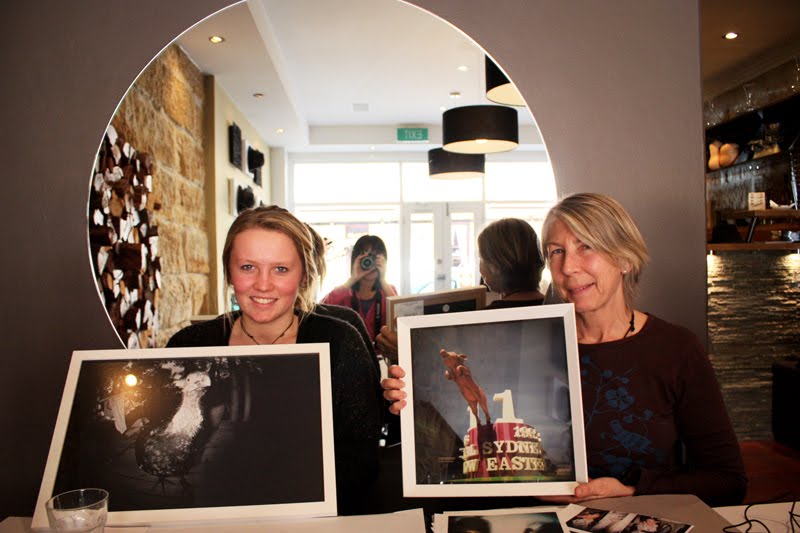
Australian Local Feature lomographer----Lisa Marshall

Lisa Marshall is a local artist and lomographer. She won the photography prize a year ago for the Royal Easter Show with a lomography photograph. Her 14 years old daughter Ina also won prize of the children lomography competition. We could have chance to interview both of them because our classmate Michelle is a very close friend of Lisa and they share interests in lomography. Thank you Michelle again.

Lisa tells us that her background is printmaking and some kinds of art creativity stuff and being a photographer, especially lomographer is more recently thing. It starts from her third year of visual arts university degree and her subject is almost about her daughter Ina, her change from childhood to adolescence. Hence, her subjects of lomography become more diverse like specific shows, people performances, statues and especially animals. She says that she always try to do something a little bit quirky and different with lomo camera. She loves accidental and surprise things. Lisa makes an example of her favourite lomo photograph to explain that. It is a black and white photograph with shadowy vignette corners and the subject is only a brush turkey stands at the center of fisheye circle. Lisa says she is very surprised by this brush turkey suddenly come to her backyard and then she decides to keep this fabulous accident in her lomo camera. This might be related to her own perspective about the difference between lomography and common digital ones.


Lisa apparently prefers film camera, especially lomo camera rather than digital ones. She explains that digital cameras are more usually for documenting or convenient purpose and they are also undoubtedly important to photographers. However, the film cameras are good at shooting landscape, background stuff and you will surprised what you will get when you get film back, it is unexpectable. Besides, Lomo cameras are more focus on composition or the moment, you are not trying to document something, maybe you just get down the floor and try to get funny angles.

Actually Lisa introduces many her works about her daughter Ina during our interview and every time Lisa is smiling and looking at Ina, Ina always get blush and lower her head. This emotional expression of Lisa and Ina very impresses us a lot, and it also help to prove my opinion of photography is that we could certainly feel the emotion and relationship between the “subject people” and photographer from looking at a specific photograph. There is one of Ina’s photos I really love is that she wears red skirt and imperial crown like a little princess, and sits by the mirror, the camera captures both sides of her. All colors in this photo are extreme rich and Ina is not strictly in focus which looks a little bit fuzzy. Lisa says this photo is not planned and this kind of fuzzy, accidental stuff works very well in lomography style.

Lisa admits that lomography somehow shapes her life like makes her daily live become more interesting and lets her has great timing, more passionate on travelling. She says she like taking time on one certain thing, even sometimes the result goes bad but the good one always worth taking risk.

BOOKS

After spending time browsing more Lomography websites, I came up with a list of books that I think they may be useful for people who are interested in Lomography. Although these books share their similarities in discussing the topic of Lomo, there are more different aspects which seems to highlight the unpredictable journey into Lomography.

"Don't think just shoot" by LSI which is the first official publication on the phenomenon of Lomography.

Even though I’ve never read this book, the title is just a really valuable encouragement for people who are new and inexperienced lomographers. From my perspective, this book is a must have for those interested in becoming a Lomographer.

We Love Lomoby Lomo Taiwan Group.

One of my Taiwanese friends recommended me this book when I was in New Zealand. As you can see, this is a Chinese version, but I love the feel of this book. It represents the spirit of Lomography which is simple but meaningful.

"Plastic Cameras" by Michelle Bates.

It’s quite rare to find a book which provides great content as well as many useful tips and techniques in Lomography. Michelle Bates takes us to share her love of Lomo cameras throughout her experience. As she says, “truly great images come from the vision of the photographer, not from the equipment”.

"Toy Cameras: Culture and Celebration" by Chelsea Klukas.

No doubt about it, the colorful images with different effects attracted me to read this book. Chelsea Klukas doesn’t only describe her journey and love on Lomography in this book, she also gives different examples and interviews with members of the Toy Camera community.

As I read back over the former posting of our group, I am surprised that our topic of Lomography has grown to such interest. We started out with the culture and equipment of Lomography and subsequently focussed more on specific examples and expressions of personal feelings on Lomography.

I really do appreciate one of the rules of Lomography; “Lomography is not an interference in your life, but part of it”. These books can help to develop skills in anyone who is interested in Lomography, and also to learn and see life through diverse camera lenses. I know many people always compare plastic cameras with digital cameras, in fact, I think high priced digital cameras and cheaper valued plastic cameras both effectively deliver creativity at its best.